Practice-Driven Legal Education
Learning supported by moot courts, legal aid, internships, workshops, and clinical exposure.
© 2026 ST. MARY'S REHABILITATION UNIVERSITY

Approved by the

“Law is a tool for social engineering and lawyers are the architects of an equal and just society”
Prof. N. R. Madhava Menon
Father of Modern Legal Education in India
The School of Law at St.Mary's University, Hyderabad, stands distinct for combining rigorous legal doctrine with real-world advocacy and emerging legal technologies. The curriculum is designed to go beyond textbook learning, with specialised exposure to AI Regulation, Data Sovereignty, and Forensic Jurisprudence.
The School promotes an immersive, practice-driven learning ecosystem through moot court training, legal aid engagement, community justice exposure, ethical reasoning, and professional skill development. The goal is to prepare legal professionals who are practice-ready, purpose-driven, and capable of responding to contemporary legal challenges.
Learning supported by moot courts, legal aid, internships, workshops, and clinical exposure.
Exposure to areas such as AI Regulation, Data Sovereignty, Cyber Law, Technology Law, and Forensic Jurisprudence.
Legal Aid Cell activities connect students with social responsibility and access-to-justice needs.
Emphasis on constitutional values, legal reasoning, advocacy, drafting, and professional conduct.
Explore industry-focused legal programmes designed to build strong legal knowledge, advocacy skills, and professional excellence.
Practical legal foundation for a direct path into law practice.
Deeper specialization and advanced legal training.
Focus on litigation, judicial services, constitutional law, and social justice.
Emphasis on corporate, business, and compliance law.
Forensic, criminal, and cyber law for science-minded students.
One-year postgraduate law programme in constitutional democracy and public governance.
One-year postgraduate law programme in criminal justice reform and forensic advocacy.
One-year postgraduate law programme in corporate and commercial laws.
One-year postgraduate law programme in intellectual property, AI regulation, and data sovereignty.
One-year postgraduate law programme in ADR and construction law.
Doctoral research programme in Law.
Career Pathways
Career-focused legal education with moot court training, internships, legal research, policy exposure, and placement readiness.


Real courtroom-style training space for simulated proceedings, advocacy practice, oral arguments, and moot court competitions.

Digital legal research resources will be listed based on officially available subscriptions and university-published information.

Provides legal assistance and public legal education through supervised legal aid work, rural camps, urban literacy drives, and community outreach.

ICT-enabled classrooms with smart boards, projectors, audio-visual support, and internet access.
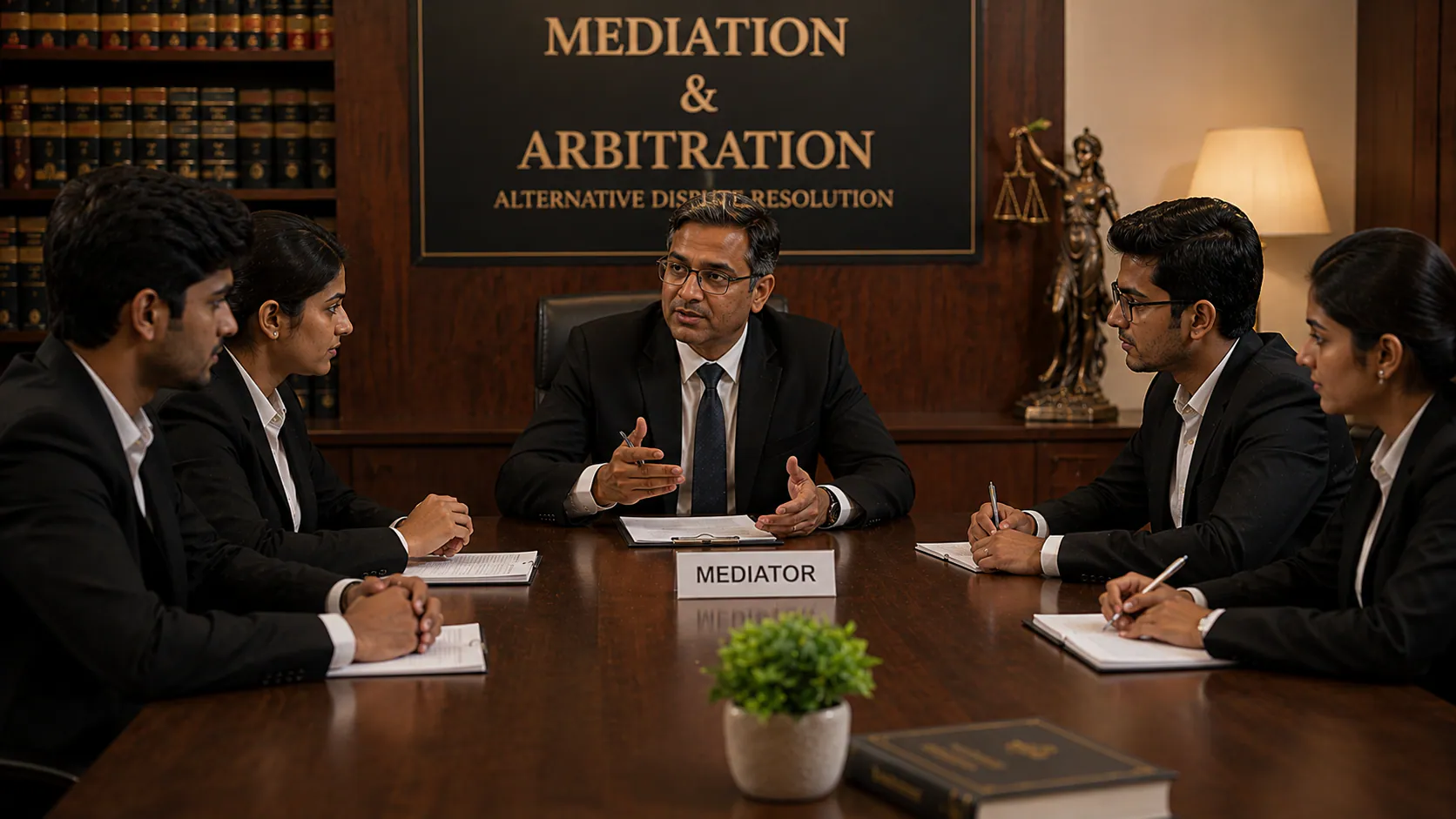
Training in negotiation, mediation, arbitration, drafting arbitration clauses, and mock dispute resolution.

Specialized lab for forensic science, crime scene investigation simulations, and criminal psychology studies.
Supports internships, bootcamps, resume workshops, mock interviews, and career guidance.
Focuses on criminal law, forensic science, mock crime scene investigations, forensic psychology, toxicology, cybercrime, and criminal profiling.
Includes Moot Court Society, Legal Debating and Literary Club, Human Rights Forum, Corporate Law Club, Cyber Law and Technology Society, ADR and Negotiation Club, Environmental Law Collective, Sports and IPR Club.
Wi-Fi-enabled campus, hostel facilities, cafeteria, sports and recreation, student lounge, and university transport.
Faculty of St.Mary's University - School of Law.
Admissions at St.Mary's School of Law are conducted with a process designed around fairness, transparency, and merit-based selection in alignment with statutory frameworks.
The School accepts recognized national and state-level entrance examinations and also conducts Stmarys University-LAT for candidates who do not have valid national entrance scores.
Select integrated law or LL.B. pathways.
Submit valid national, state, or St.Mary's University-LAT score.
Upload academic records and required certificates.
Complete counselling, verification, and final confirmation.
Case law analysis, judicial decisions, legislative texts, and scholarly readings.
Classroom discussions built around real legal problems and socio-economic contexts.
Moot court exercises, role-plays, legal clinics, and courtroom simulations.
Project work, legal writing, research methodology, and dissertation-based learning.
Course outlines, weekly teaching plans, reading lists, and advance preparation.
End-semester feedback supports course improvement and academic responsiveness.
Access the complete legal education ecosystem, resources, and official student portal for the School of Law.
For admissions-related enquiries, connect with the School of Law admissions office.